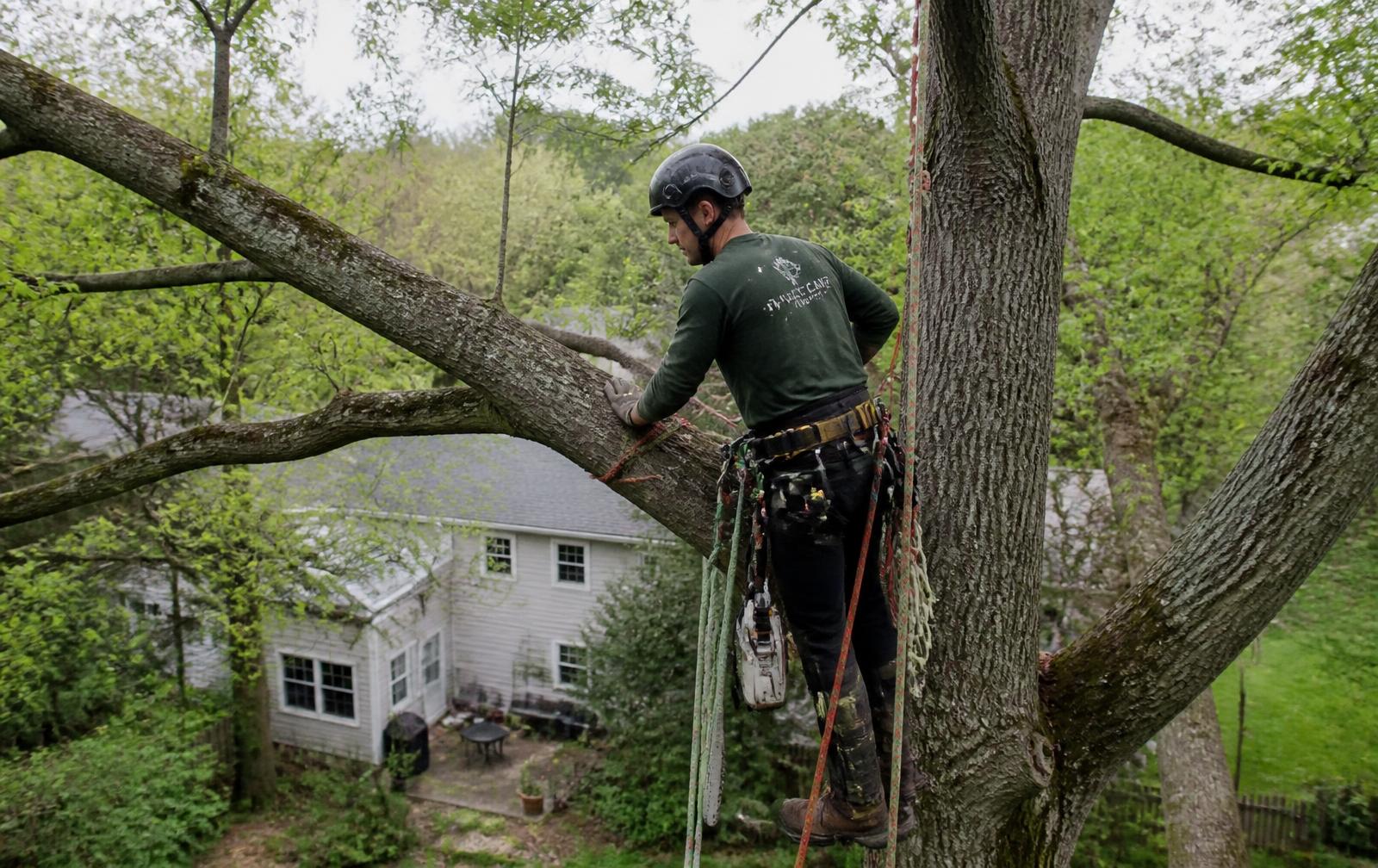
Dangerous Tree Removal in Durham Region
A tree that looks wrong usually is. If it leans more than it used to, has a split, a hollow, or a canopy full of deadwood over your house, describe it here and we'll help connect you with a local tree professional who can assess the risk.
Warning signs worth acting on
The signs that matter most are structural: a crack or seam running down the trunk, a cavity at a main union, fungal brackets at the base (a strong indicator of internal decay), soil heaving on the opposite side of a lean, and large deadwood held in the canopy. A recent change — a lean that got worse after a storm — is more urgent than an old, stable one.
Ash trees across Durham are still failing years after emerald ash borer, and dead ash becomes brittle and unpredictable to climb. Those are jobs where the removal method itself has to change, which is why an assessment matters before anyone quotes.
Assessment before removal
Not every worrying tree needs to come down. Sometimes crown reduction, cabling or removing a single failing limb is enough, and a good arborist will say so. Ask for the reasoning behind whatever is recommended — a professional should be able to explain what specifically makes the tree a hazard and what a target of failure would be.
Trees we hear about most
- Trees leaning toward a house after a storm
- Split trunks and cracked branch unions
- Dead ash trees near a driveway or play area
- Hollow or fungus-covered trunk bases
- Heavy deadwood over a roof or patio
- Trees growing into or under hydro lines
Dangerous Tree Removal across Durham Region
Choose your municipality for local details, or submit the form and we'll route it for you.